written by: évah myles
All my life, I have been told I am mean, self-centered, and aggressive. I am none of those things. Growing up in white spaces, in white schools, with white friends, I was seen as sub-human. I was not the same as them, my family was not the same as theirs, and, especially, my feelings were not the same as theirs. In their mind, I had no room in my heart for love, niceness was a word, not an emotion, and I could never replace them as the first choice. Now, I don’t believe they were wrong. I have no room in my heart for white sympathy, I do not believe in niceness, and I am not replacing anyone because I am the first choice.
“White Niceness” is a tale as old as time in America. It was defined perfectly by Ashani Mfuko on Facebook in 2023, stating, “[White Niceness] is a conditional ‘niceness’ based on how well you perform for, coddle, and pander to whiteness, white supremacy, and white people.” This version of niceness, not kindness, is a trap, especially for Black Americans. It is a pass White people can abuse to excuse racism and fall into victimhood, yet it’s a dangerous weapon used against Black people; if we do not perform in the way they expect or want us to, our lives are at stake.
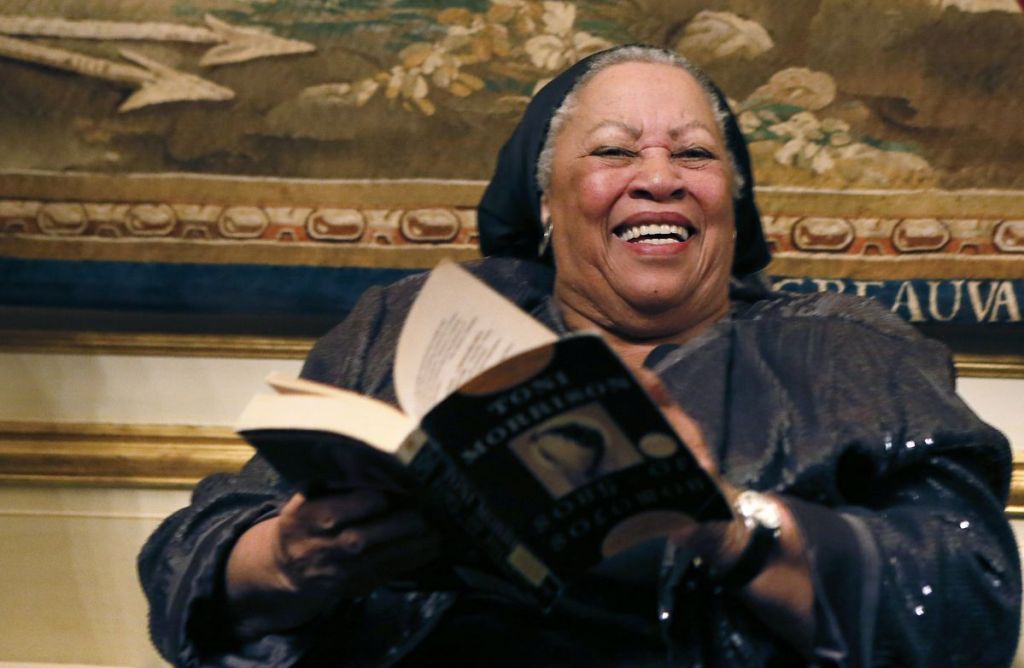
Recently, conversations surrounding Black women writers, their personalities, and whether they owe people ‘niceness’ have been circulating online. Toni Morrison, specifically, has been centered in these discussions. People have spoken candidly about their experiences with the author of Beloved, describing their blunt interactions.
But my question is, why does this matter?
I wonder who got on the internet first with the intention to reflect on their experiences with Morrison. What did they plan to say? Why did they have that opinion of her in the first place? Did they attempt to question further? Reflect on their entitlement? No one, not even the front-runners in these discussions, knew Morrison personally. What did they expect out of Morrison? What did they want? How did it contrast with what they received?
Every part of her being–and her work–rejects colonial systems (and in turn the concept of niceness); none of her work indicates that she would be a ‘nice’ or an extraverted person. Toni Morrison was a deep thinker. All of her work shoved a mirror in front of society and ourselves, the parts we saw, and the parts we refused to look at. Morrison produced eleven novels in her lifetime, and in addition to those works, published non-fiction pieces, plays, poems, essays, and more. So much of her time was spent learning, developing her voice as a creative, caring for herself, advocating for Black thinkers, and living life. What time did she have, in between being a literary icon and surviving, to cater to you?
Why do we, as Black people, pander to ‘White Niceness’? Why do we expect greats like Toni Morrison, Bell Hooks, and Zora Neale Hurtson to be ‘Nice’, but call Chappel Roan ‘cunt’ and an ‘icon’ for being rude and ignorant? Is it a means of survival? Do we still follow our grandmother’s rules? To always smile, say yes ma’am and no sir, to never look a White man in the eye, and never snap in the vicinity of a White woman? Is this taught? To bash eachother for not subscribing to White supremacy in any form? Is this the White man talking through us?
Do Black women owe you niceness? Or do you want them to do what you expect? To act in a way you can control and contain?
Growing older, I transferred to a school with a higher Black population, and I encountered these same characteristics in (specifically) White women. But, too, I met Black women who never questioned what their grandparents or The White Man taught them.
Tropes like ‘being articulate’, ‘one of the good ones’, and even ‘good hair’ are easy to point out, damaging, and offensive, but we don’t realize how much we feed into them as a community. Historically, Black people had to silence themselves and (to a degree) submit to some of these tropes to get by, survive, keep a job, etc. Just like victimhood is taught, fear is taught, too. My sister grew up believing her hair would become straight if she put enough heat on it, believing that it looked prettier after a hot comb. If she hadn’t learned how harmful that rhetoric is, she would’ve, then, gone on to tell other Black girls, and maybe even her future children, that ‘heat training’ your hair is the only way to get ‘good hair’.
As Black women, we put ourselves in a box because we were told we could never be more than a box. We will never be able to see outside of this box if we don’t question why we are caged and how we are encouraging the caging of our sisters.
Niceness will, and can, never be owed; What is niceness in a society where the word is a fallacy?

![on what it means to be a poet [a note from évah]](https://saywhatsonursol.com/wp-content/uploads/2026/02/fc27a461eec119de23fbc8e5dd469df9.jpg?w=1024)


 [sol]
[sol] 
Leave a comment