written by: évah myles
I think back fondly on Sundays spent at my grandmother’s, cicadas singing, smoke bouncing off my garments, and sugar hot off my breath. We’d sit in a panelled room, her wooden rocking chair creaking, and my stool right beside her bodice. We sat, our laughter filling the room, beads spilling onto the floor, into our hearts, and we conversed. We conversed with each other, through each other, with our ancestors. She spoke through me to a realm I met through her. It was those nights silence never kissed me goodnight, my mind felt most quiet.
Afro Gothicism and/or Black Southern Gothicism only brings comfort to the African American minds who consume it. Others may be confused, curious, or simply entertained, but never comforted. Books by Jesmyn Ward and Octavia E. Butler, writers like Toni Morrison and Gloria Naylor, and filmmakers such as Ryan Coogler, Jordan Peele, and Kasi Lemmons encapsulate the home in Black experiences. What does it mean to be Black? To carry the history we carry? The crowns our ancestors passed to us? Especially and specifically post-transatlantic slave trade and Jim Crow.
Black Southern Gothicism examines spirituality, race, and the crevice we sit between our people and expression. OurWeekly LA states, “It’s about memory, trauma, resistance — and the unburied past that refuses to stay silent, according to African American professor emeritus Dr. Amen Rahh, host of the Conscious Corner podcast.”
What we know and see as an expression of our experience beyond popular media is not recent or a contemporary discovery. Our ancestors in West Africa carried their spirituality with them closely pre-colonialism. In Dr. Rahh’s conversation with OurWeekly, they spoke about how “West African lore, trickster spirits and shape-shifters blurred the line between divine justice and human folly. These stories were not designed simply to frighten; they were meant to teach. Evil was not a monster under the bed — it was the greed, betrayal, or arrogance within.”
These tales sailed with us from the coast of Africa, on the ships they forced us on, and to the country we fight in today. Our spirituality has not disappeared or changed, only transformed. We have carried our history with us through hymns and prayers, through our hair and our spirit, in spite of oppresion and hate. The idea our ancestors and their stories walk with us every day and guide us through life was the very seed of Black Southern Gothicism.
As enslaved Africans spent more time on American soil and fought the horrors of enslavement, their culture, religion, and way of thinking merged with Christian iconography. It was a way of survival, processing the emotions of genocide on a scale never seen before, of being stolen from home, and making sense of the world around threm. The Devil became a symbol of overt evil, there was no way to escape the horrors of enslavement or ignore it under the gaze of good, evil, and spirituality. Ancestors and the ghosts of began to pour out of trees, swim out of waters, rip from another’s skin, yet the answer to freedom had a variety of interpretations.
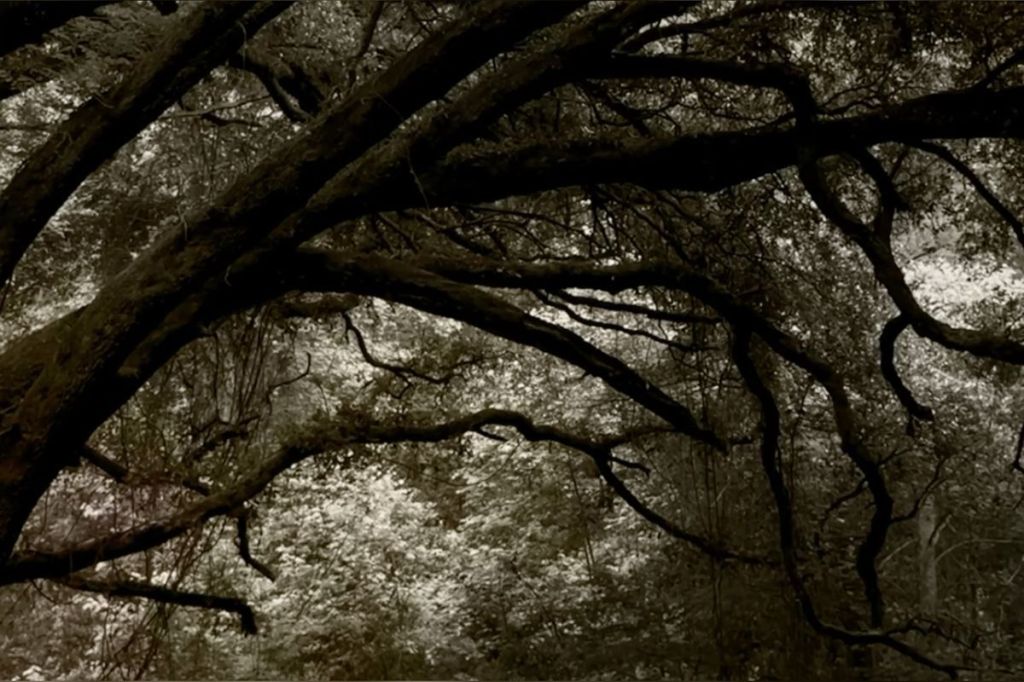
The Jim Crow era metamorphosed Black Southern Gothic as we know it. The stories were no longer words on paper, but the first autobiographical tales since Harriet Jacob’s Incidents in the Life of a Slave Girl. Javon Johnson, Professor and Director of African American & African Diaspora studies at University of Nevada Las Vegas (UNLV), stated in his conversation with OurWeeklyLA, “Segregation, lynchings, and racial terror were so pervasive they became the architecture of the Black subconscious. Communities whispered of cursed roads, haunted trees, and the spirits of the wrongfully killed who never found rest.”
Much of our modern knowledge on Southern Black folklore and spirituality is indebted to Zore Neale Hurtson, whose work collecting history, stories, and truth within our community revealed what Dr. Johnson calls, “a chilling landscape of ghosts, root doctors, and hoodoo practitioners”, which permeated a realm where justice was only seraphic, as humans were incapable of delivering fairness.
Every supernatural figure, especially ghosts, carries meaning, often memorializing the tragedies imposed on forgotten lives. There is an eeriness in every word spoken, every scene set, ever sun that rises to remind you of the world we once lived in, the world we continue to live in, and the eternal effects colonialism will have on our society. Afro-Gothicism is a form of processing, understanding our predecessors, their stories, and preserving culture as a form of resistance.
![on what it means to be a poet [a note from évah]](https://saywhatsonursol.com/wp-content/uploads/2026/02/fc27a461eec119de23fbc8e5dd469df9.jpg?w=1024)


 [sol]
[sol] 
Leave a comment